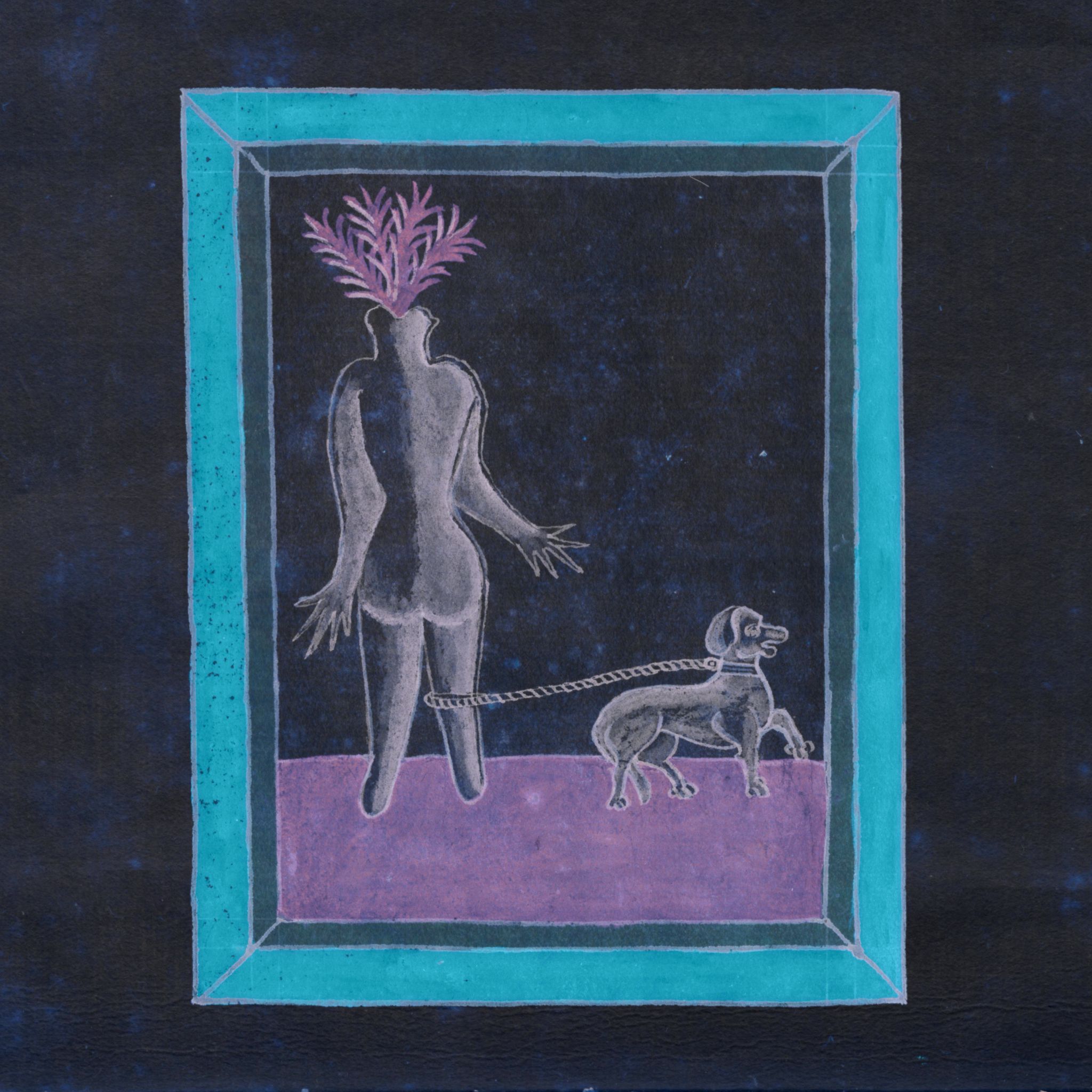
Anthology 3: The Mire
The Mire began as Charlie’s song, and it arrived in the way his songs often do: not by planning, but by pressing record and seeing what survives.
On 5 September 2022, Charlie had a line, a melody, and not much else: ‘well I came home to a memory of what was once a beautiful dream’. He set his phone down at home, plugged in his guitar, and improvised the whole thing on the spot. It’s Charlie’s preferred method, and a kind of discipline in itself: staying loyal to the first impulse, resisting the temptation to “improve” it into something unrecognisable. It’s also very efficient, in the sense that you can’t overthink if you’ve already committed the evidence to audio.
He brought the recording to the band’s songwriting calls while we were split up at university. We agreed it was worth keeping, and worth taking seriously later. The following week Charlie re-recorded it and added flute and clarinet parts, because he had recently started trying to play flute, and Reuben had recently started trying to play clarinet. This is the sort of sentence that sounds promising until you remember the “recently”.
When we came back together, it turned out to be fairly easy to assemble, mostly because Charlie had already written most of the architecture. The woodwinds became Charlie on Mellotron, with Zach doubling on violin, which did what the flute and clarinet were trying to do, but without the illusion that we were suddenly a chamber ensemble.
At first, the song had a working title: ‘Not My Phone’. It also had a problem. There was too much blank space where the refrain needed to hit. After one rehearsal, Charlie wrote the lines that now feel like the song’s spine:
‘I can’t believe what we could’ve been,
the man I promised I would be,
in the mud, the muck, the mire,
my dreams on the funeral pyre,
I’ve seen it all before.’
Once that section existed, the track stopped feeling like a sketch and started feeling like a verdict.
Charlie is the lead vocal, with Reuben on backing vocals, which most people don’t even realise, because our voices are (un)helpfully similar. We’ve essentially engineered a vocal blend so seamless that the listener can’t tell we did it.
There is one solo on Garden Songs that fully earns its place, and it’s Alex’s. In rehearsal, he improvised a lead part that was immediately ‘right.’ On the record, he doesn’t even play until that moment. He just arrives, says what needs saying, and disappears again, like someone turning up late to a conversation and still being the most articulate person in the room.
The outro was also born in rehearsal and kept. It has that undulating, repeating texture we associate with Philip Glass, the sense of a pattern turning over and over until it becomes physical. It’s not a climax exactly, more a slow acceptance. The song doesn’t resolve. It sinks. Which is fitting, given the title and the general moral outlook.
What we remember most about The Mire is how intact it stayed. It came out whole, and we mostly had the good sense not to dismantle it in the name of “progress”. For us, it’s a reminder that a first idea is sometimes not a starting point, but the point. Also, that taking up woodwind instruments in a fit of optimism is best treated as a temporary condition.
Personnel
Charlie Stevens – Guitar, vocals, lyrics & Mellotron
Reuben Esterhuizen – Backing vocals & Synth
Alex Queripel – Guitar
Kristian Queripel – Bass
Zach Ellis – Drums & Violin
New Place